



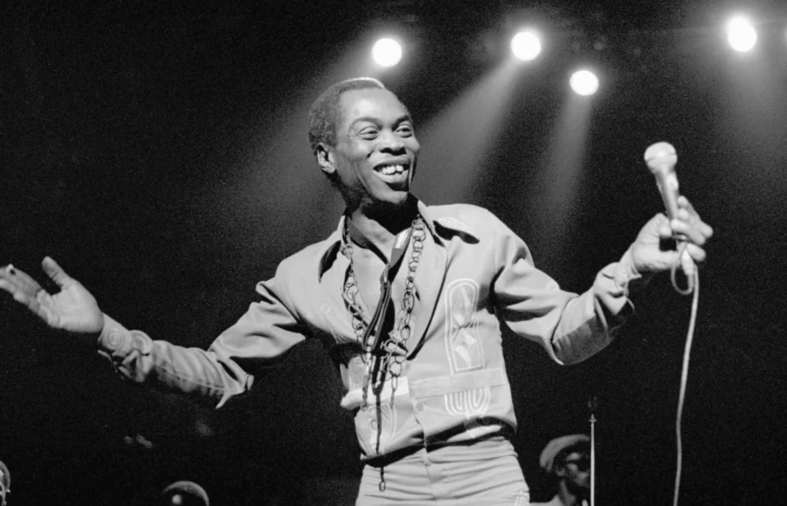

Fela Anikulapo Kuti, the pioneer of Afrobeat, built an international legacy long before The Recording Academy acknowledged it with a Lifetime Achievement Award.
The Recording Academy recently announced the recipients of its 2026 Special Merit Awards’ Lifetime Achievement honors, recognizing Whitney Houston, Chaka Khan, Cher, Carlos Santana, Paul Simon, and Fela Anikulapo Kuti.
The honor bears witness to musicians whose careers reflect a historically relevant record of longevity on the global music scene.
Fela is the only posthumous recipient of the 2026 Lifetime Achievement honors—the Afrobeat pioneer would have been 87 as of 2025. His untimely death in 1997, attributed to heart failure in a report by The New York Times, shocked Nigerians and Afrobeat fans across the globe.
Over 150,000 Nigerians bombarded Tafawa Balewa Square to honor Kuti, with an additional million stacked in stria along the route to witness his coffin’s journey.
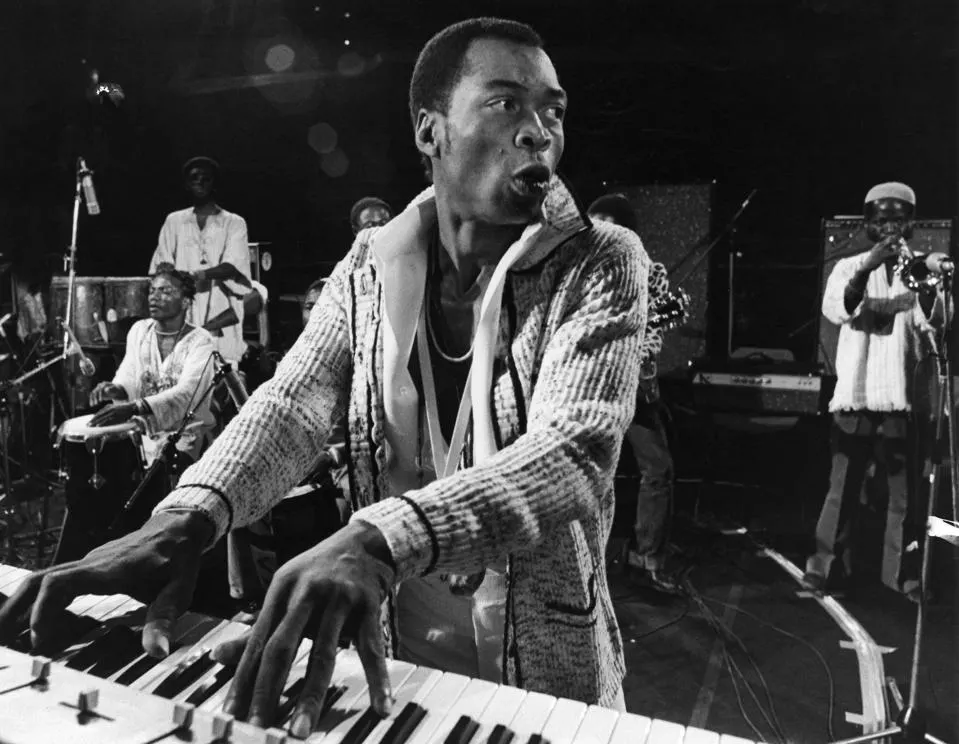
Fela is positioned to make history as the first African act to receive the Recording Academy’s Lifetime Achievement Award.
Fela has long been recognized and engaged by global institutions and cultural figures beyond Africa, making the Recording Academy’s honor far from his first instance of international acknowledgment. Fela was acknowledged by the Rock and Roll Hall of Fame as a nominee for induction in both 2021 and 2022.
In 1966, prior to the official founding of Afrobeat, Fela was a practitioner of highlife-jazz, which with his band Koola Lobitos gained popularity in Lagos and even led to a role as a backup act for Chubby Checker during his tour in Africa.
Fela made his official transition from highlife-jazz in 1968 and declared at a press conference that his music would thereafter be known as Afrobeat, effectively coining the name of the genre.
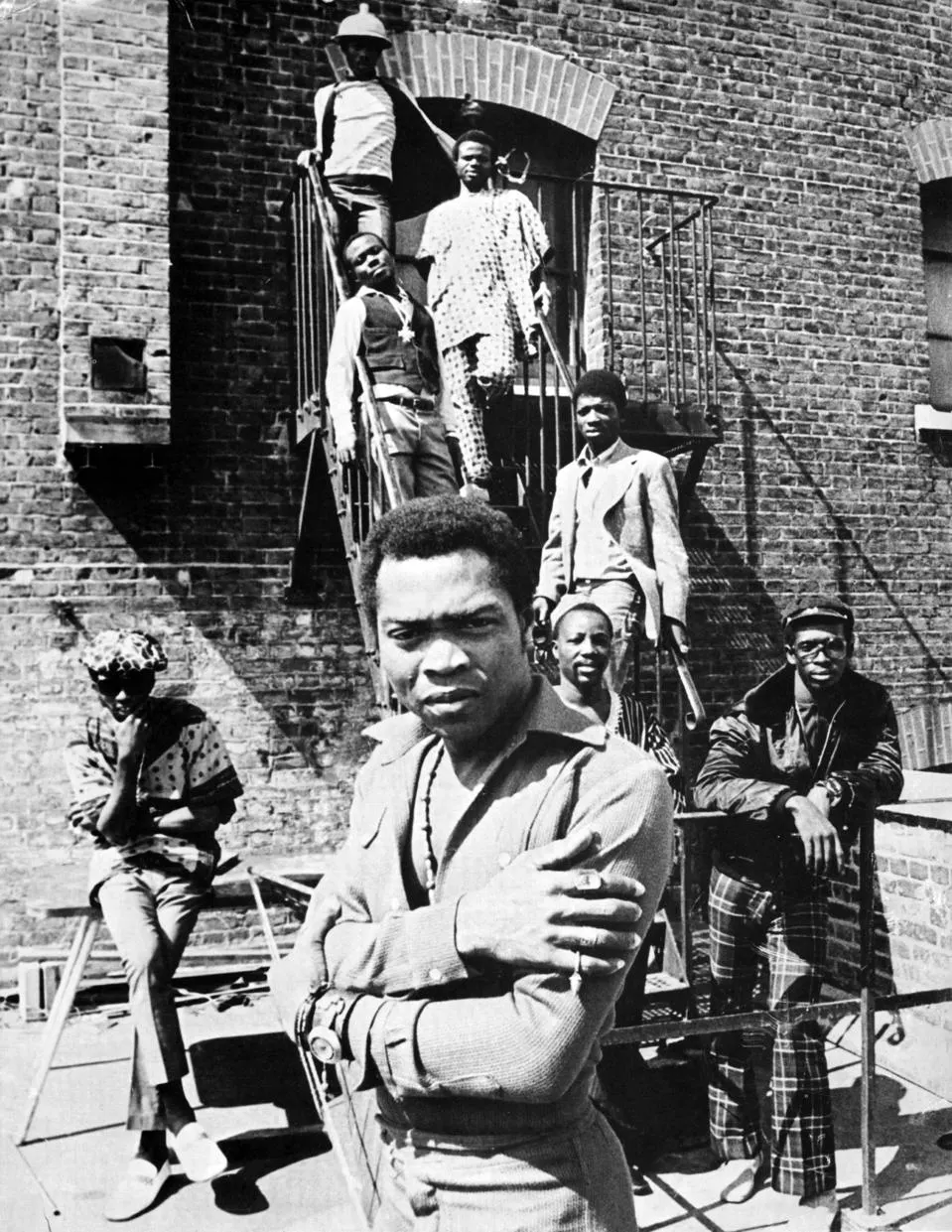
In late 1970, James Brown, along with Bootsy Collins, embarked on his second tour in Africa with Nigeria slated as a destination. During this visit, Brown and his band paid a visit to Fela’s club, Afro-Spot, where they witnessed the Afrobeat pioneer perform.
Under his band, Africa 70, Fela collaborated in 1971 with Ginger Baker for Live!, an album that paired Baker’s signature Cream-era drumming with Fela’s burgeoning saxophone and trumpet approach, capped by a notable drum-off between Baker and Tony Allen.
In 1973, Paul McCartney traveled to Lagos to record Band on the Run, the third studio album by his band Wings. During the trip, McCartney met Fela and also paid a visit to Kuti’s performance venue, the Shrine.
Come 1980, Fela teamed up with Roy Ayers for their pro-Black themed collaboration, Music Of Many Colours.
In 1984, Fela performed at the Glastonbury Festival of the United Kingdom, delivering a notable performance of “Teacher Don’t Teach Me Nonsense.”
“There’s no soundcheck,” said Rikki Stein, Fela’s longtime manager, during our 2024 interview on WKCR 89.9 FM. “There’s only something called a line check, which is that every damn mic is on and sounding okay. So when Fela saw what was going on, he insisted on going out to the mixing desk, which is out in the middle of the crowd. I had to fight through the crowd with Fela to get there.”
“He stood there twiddling knobs blindly. You could say I finally got him back on stage. This was filmed by the BBC. And when Fela walked out on stage after being introduced, his first words were, ‘Oh, you don’t know the horrors I’ve had to go through to get on this stage.’”
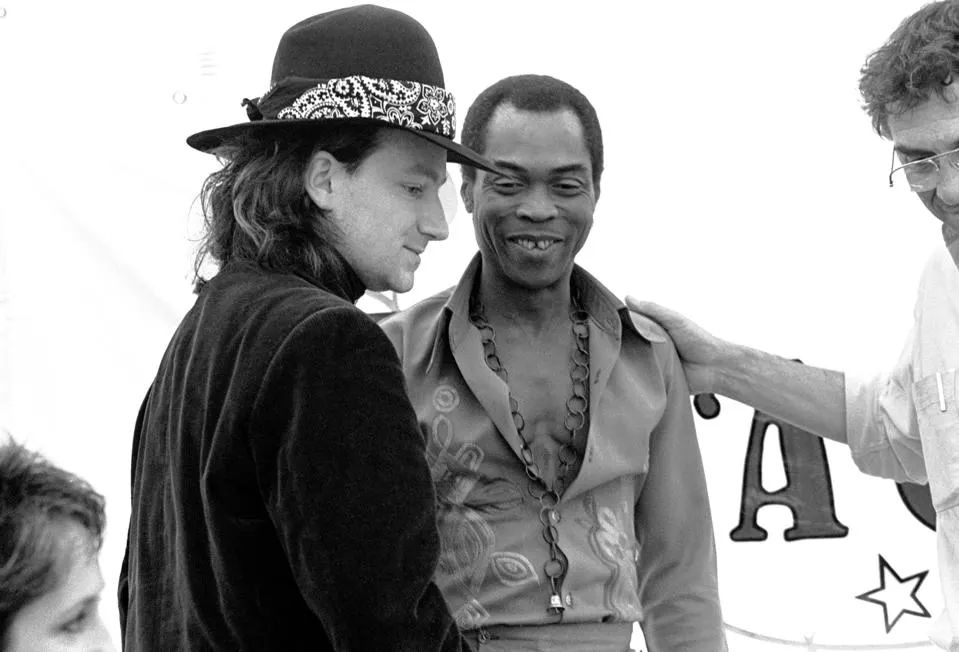
Amnesty International deemed Fela a prisoner of conscience in 1985, after determining that his prosecution for currency violations by Nigeria’s military government under Muhammadu Buhari was politically motivated and that his trial failed to meet internationally recognized standards of fairness.
In 1989, Fela graced the Apollo Theater to perform at a benefit concert for James Brown —an event ordered by a judge, alongside a $1,200 fine, following Brown’s drug-related charges and a two-state car chase in South Carolina that ultimately resulted in a six-year prison sentence. The benefit concert was dedicated to abused children.
“I don’t usually play benefits, not even for Africa: we need good progressive ideas instead of benefits,” Fela told the New York Times. “But James should have been treated with much more respect in considering his offense. The penalty was too high. It needs to be protested.”
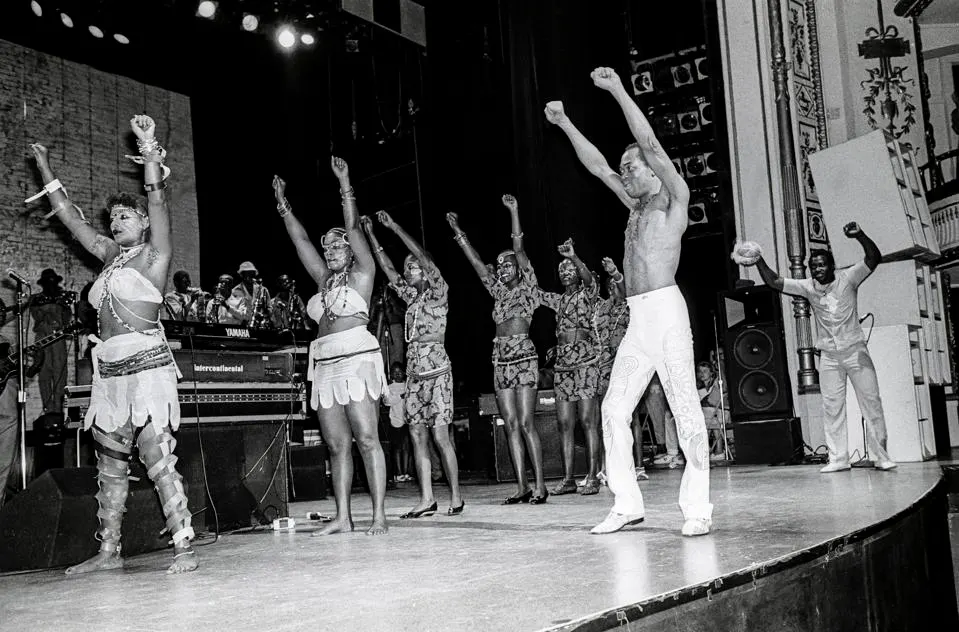
Now decades after his death, Fela’s international engagements and posthumous honors continue to shed light on his lasting relevance as a cultural phenom whose music and politics carved a lane in global music history.
The Recording Academy’s Special Merit Awards Ceremony featuring the 2026 Lifetime Achievement Award will take place during Grammys week on January 31.